The Stranger in Her Arm: Alien Hand Syndrome and the Hidden Self
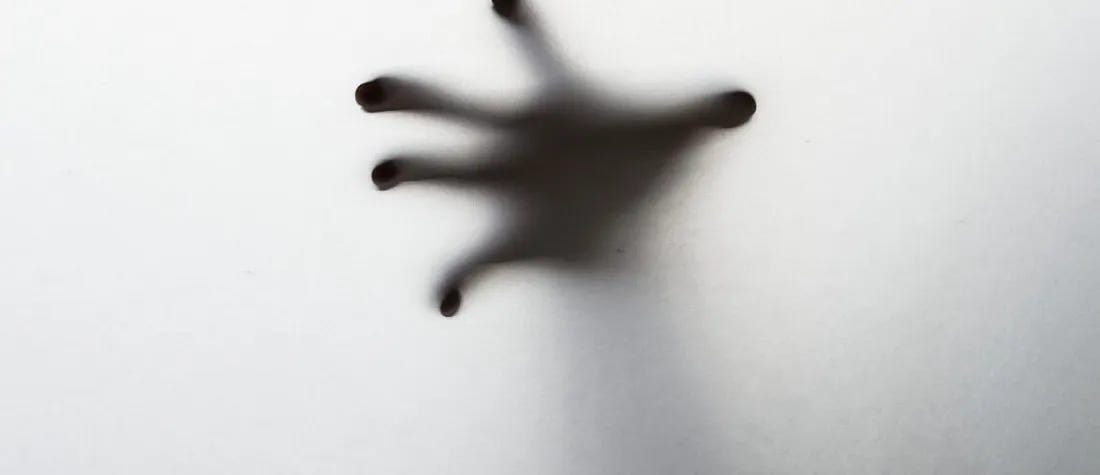
Karen Byrne lit a cigarette. Her right hand brought it to her lips. The lighter clicked. Everything normal. Then her left hand shot up, plucked the cigarette from her mouth, and crushed it into the ashtray.
Karen Byrne lit a cigarette. Her right hand brought it to her lips. The lighter clicked. Everything normal. Then her left hand shot up, plucked the cigarette from her mouth, and crushed it into the ashtray.
She stared at it. “I guess he doesn’t want me to smoke,” she said He. Not “it.” Not “my hand.” He. She wasn’t being dramatic. She wasn’t confused. That was simply the most honest description available to her, because she genuinely had not done that. Her hand had. And as far as Karen was concerned, her hand was someone else entirely.
In the months that followed, the hand developed what you could only call a personality. It undid every button she fastened. It hung up phone calls mid-sentence. It dumped her coffee, slapped her face hard enough to leave bruises, and when she swore, it reached up to cover her own mouth, like a disapproving stranger who had taken up residence in her left arm.
She would be mid-task and suddenly notice, with a start, that the hand had been busy without her. She didn’t feel it happening. She didn’t sense it coming. She would simply look down and find evidence of something she hadn’t done. “Until he said that, I had no idea,” she recalled once, describing the moment her doctor pointed out that her hand was actively undressing her while she tried to button her shirt.
Karen Byrne had what neurologists call Alien Hand Syndrome (AHS). And her story, as extraordinary as it is, is far from the strangest one on record.
It Started Over a Century Ago
In 1908, a neurologist named Kurt Goldstein was called to examine a 57-year-old woman who had suffered a stroke. She was recovering well in most ways. But her left hand had become something she could neither explain nor control. It would reach out and grab objects, then refuse to release them. It would interfere with whatever her right hand was attempting, as if running its own agenda in parallel.
And on one occasion, it wrapped its fingers around her own throat. She had to fight it off with her other arm. She told Goldstein the hand was possessed by an evil spirit. She insisted with calm, consistent conviction that it did not belong to her.
“Those are two very different people,” she said, gesturing between her arm and herself. “The arm and I”. There is something almost funny about this sentence, until you sit with it. A woman, fully conscious, fully present, pointing at her own hand as though introducing a difficult acquaintance. The arm and I. As if they had simply been assigned to share a body and were making the best of it.
A 2025 scoping review published in the Orphanet Journal of Rare Diseases identified 72 documented cases between 2010 and 2025 alone, a mean patient age of 59, and experiences so strange that reading through them feels less like reviewing medical literature and more like stumbling onto evidence of something the brain has been quietly concealing from all of us.
The Woman Whose Hand Tried to Strangle Her
Some alien hands don’t just cause inconvenience. They turn dangerous.
Neurologist D.H. Geschwind and colleagues documented the case of a woman who had undergone coronary artery bypass surgery. One week after waking up from the operation, her left hand had acquired what she described as “a life of its own.” It would unbutton her hospital gown without warning. It would fight with her right hand over the telephone. And at night, it would reach up and try to choke her while she slept.
She had to physically restrain her own left hand with her right arm to fall asleep safely. Brain imaging revealed damage to the middle and posterior portions of the corpus callosum, the thick bundle of nerve fibers connecting the brain’s two hemispheres. A contained a lesion. And the result was that part of her brain, completely cut off from her conscious self, was running its own nocturnal program. She had no idea what it wanted. She had no way to reach whatever part of herself was issuing those instructions. All she could do was hold her hand down and wait for morning.
The Man Who Couldn’t Let Go
Not every alien hand is violent. Some are simply relentless. A 61-year-old man documented in the Journal of Rehabilitation Medicine would grip objects during his therapy sessions without meaning to. His hand would lock around whatever was nearby and he simply could not make it open.
He wasn’t trying to hold on. He would look at his own fist, visibly puzzled, and it would stay closed. He described it the way many patients do: not as his hand misbehaving, but as his hand operating on instructions from somewhere he could not reach. He wasn’t giving the orders. He was just the one attached to the hand that was.
The Woman Whose Hand Belonged to Her Grandson
A 71-year-old woman documented in BMC Neurology dealt with something stranger still: a hand that existed in permanent opposition to everything she wanted to do.
If she reached for something with her right hand, the left would block it. If she gripped something, the left would pry it away. Every action met with a counter-action. Every intention answered with a quiet veto. She eventually concluded that the hand belonged to her grandson. It sounds like confusion. But consider it from where she was standing. The hand had its own preferences, its own impulses, its own sense of what she should and shouldn’t be doing.
It responded to the world independently. It had, by any honest definition, a will. It simply wasn’t hers. So she named it after the person it most reminded her of: someone persistent, not always listening, and entirely convinced he knew best.
The Arm That Floated
Then there is the kind that doesn’t fight or grab. It just rises. Some patients describe their arm lifting slowly, without any sensation of effort or intention, as though gravity has released it while the rest of the body hasn’t. They watch it happen the way you might watch weather: something occurring nearby that has nothing to do with you.
A 57-year-old woman described in F1000Research experienced all three things at once after a stroke: the compulsive grabbing, the fighting against her other hand, and the slow unexplained rising of the arm. Three rebellions happening simultaneously in one body. She was asked to describe what it felt like from the inside. She said it felt like being haunted from within.
What Is Actually Happening
Here is the explanation, turns out it is almost as strange as the experiences. Your brain is not one unified thing. It is two halves, left and right, each running its own programs, each with its own sense of what the body should be doing. Under normal circumstances they stay coordinated through a dense bundle of roughly 200 million nerve fibers called the corpus callosum, which connects them and keeps them in constant dialogue. It is, in a very real sense, what makes you feel like one person. When it is damaged, by a stroke, a tumor, or in Karen Byrne’s case a surgery to treat her epilepsy, the two halves lose their coordination. They keep running. They just stop checking in with each other. One hand starts acting on intentions, the conscious, speaking, story-telling you know absolutely nothing about.
The hand is not broken. It is working exactly as it was built to. It is just taking orders from a part of the brain you have no access to.
The Experiment That Should Make You Stop and Think
Neuroscientist Michael Gazzaniga spent decades studying people whose corpus callosums had been surgically divided, the same procedure Karen Byrne underwent. He found that the two halves of a divided brain function, in a meaningful sense, like two separate minds. In one famous experiment, he flashed the word “WALK” exclusively to a patient’s right hemisphere. The patient stood up and walked across the room. When asked why, the left hemisphere, which had not seen the instruction, did not say “I don’t know.”
It immediately produced an explanation: “I’m going to get a Coke.” Confident. Instant. Completely fabricated. Gazzaniga called this “the interpreter”: the part of the brain whose job is not to monitor what you are doing and report accurately, but to construct a plausible story about what you are doing, after the fact, whether or not that story is true.
Then in 1983, neuroscientist Benjamin Libet found something that changed how scientists think about decisions. He asked people to flick their wrists whenever they felt like it while he measured brain activity. The neural signal preparing for the movement appeared, on average, around 350 milliseconds before the person reported being consciously aware of deciding to move. The brain had already begun the action before the conscious self knew it had chosen anything. The experience of deciding may arrive after the deciding has already started. Most of the time you never notice. The story lines up with what you believe you chose, and you call that experience having a self. AHS is what happens when the story stops lining up. When the hand does something the narrator didn’t write, and there is nowhere left to hide the gap.
She Learned to Live With ‘’Him’’
Karen Byrne, in her 50s at the time of her NPR interview, had lived with the hand for nearly two decades. It never became fully hers again. What she got instead was a working relationship, a quiet daily negotiation between the part of her that could speak and plan and the part that could not be reasoned with but could sometimes be redirected. She talked to the hand. She gave it objects to hold. She learned when to expect trouble. She built years of ordinary life around the fact that she was, in some real and irresolvable sense, not alone in her own body.
“Half my brain just didn’t particularly care for me too much,” she said once, with the kind of humor that only arrives after you have completely run out of alternatives.
What her experience leaves you with is not just strangeness. It is something closer to tenderness, for Karen obviously, but also for the brain itself, which works so hard every single moment to hold the experience of being one person together.
For all the people whose seams are still hidden, who move through the world feeling unified and in control, never knowing how much effort goes into making that feeling possible. Your sense of being a single person in a single body making deliberate choices is something your brain builds continuously, and mostly invisibly. Karen Byrne’s brain stopped hiding the construction. And what she found underneath was a second self, with its own ideas and its own agenda, who had apparently been there the whole time.
Karen Byrne’s story in her own words: NPR Invisibilia and the BBC documentary The Brain: A Secret History