Notes from
the field.
Brief thoughts, small discoveries, and questions that deserve a closer look — without needing a full-length story.
Plants can make sounds when they’re thirsty. Scientists recorded tomato and tobacco plants producing ultrasonic sounds when dehydrated or injured. Humans can’t hear these sounds unaided, but microphones can pick them up. What else is happening in nature that we simply can’t hear? https://www.cell.com/cell/fulltext/S0092-8674(23)00262-3?_returnURL=https%3A%2F%2Flinkinghub.elsevier.com%2Fretrieve%2Fpii%2FS0092867423002623%3Fshowall%3Dtrue
Today is World Mental Health Day 2026! This year's theme is "Lived Experiences Heard: Real Voices, Real Change." So here is a small piece of science about what happens when we find the words. Why does naming a feeling make it hurt less? Think of the last time you were not okay. Maybe something hurt you, or made you angry or sad. Then you told a friend about it and felt slightly or even much better. Nothing about the situation changed, only that you spoke out. Putting feelings into words can help calm the strong, negative emotions that come with it. Neuroscientists have looked at why, and one of the best-known answers comes from a 2007 brain imaging study led by Matthew Lieberman at UCLA. The team used functional Magnetic Resonance Imaging (fMRI) to compare naming an emotion with other ways of processing negative emotional images. They found that naming it reduced the response of the amygdala and increased activity in the right ventrolateral prefrontal cortex (RVLPFC). ● The amygdala is the brain's alarm system. It reacts to emotions really fast, sometimes before you even have time to think about what you are doing. ● The right ventrolateral prefrontal cortex ( RVLPFC) is the brake. It is located behind the right side of your forehead and is linked to pausing, holding back an automatic reaction, and choosing how to respond. ● The more active the RVLPFC was, the quieter the amygdala became. The researchers suggest the signal may travel from the RVLPFC, through a middle prefrontal region, to the amygdala.² In other words, finding the word seems to switch on the part of the brain that can pause and think, and that part may then tell the alarm to "calm down." That may be why talking to a friend or sitting with a counsellor can help. Lieberman said the effects are likely to be modest, but it is still a step towards feeling better. Saying a feeling out loud won't make it disappear, but it can make it less overwhelming. Try it: next time you're overwhelmed, finish this sentence: "I feel ___ because ___." But it isn't always that easy. Many people never say how they feel because of stigma: the fear of being judged, called weak, or treated differently. Staying quiet doesn’t mean you’re weak. It often means you’re afraid of being judged, and stigma around mental health should never be normalized. Speaking out is not weakness. When silence becomes the default, people end up struggling alone, and every time we listen without judgment, we make it easier for the next person to speak. Saying how you feel is a first step, not the whole journey. And if you don’t feel better even after talking to friends, reach out to a health professional. You don't have to handle it alone. And to everyone who has ever struggled to find the words: your voice matters, and being heard is where change starts.
If the universe is infinite, every line of sight should hit a star. So why is space black?
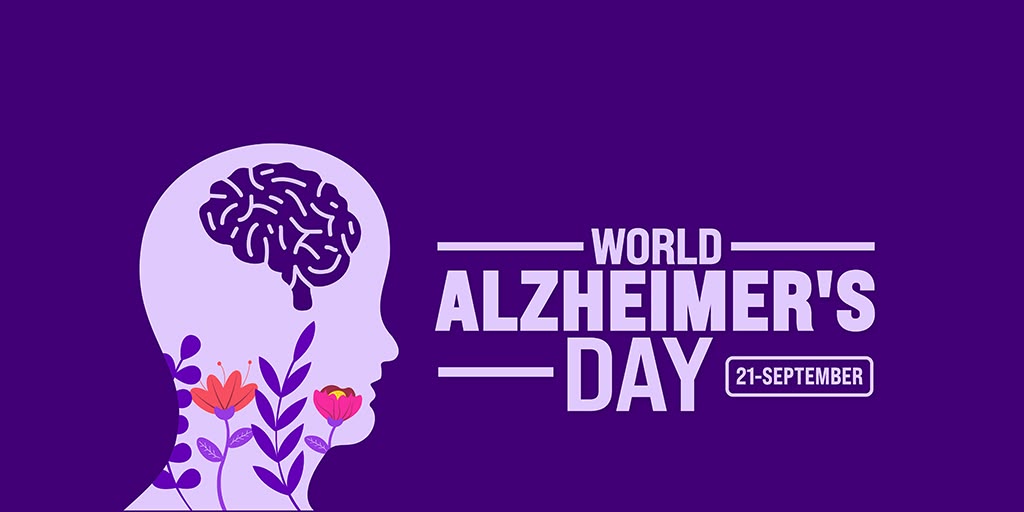
Today is World Alzheimer’s Day 2026! Alzheimer’s disease (AD) is the leading cause of dementia, accounting for 60–70% of cases worldwide. It also ranks as one of the top leading causes of death globally. It is characterized by the abnormal accumulation of two proteins in the brain: • Amyloid plaques • Tau tangles These disrupt communication between brain cells and kill them, leading to progressive brain shrinkage, especially in areas that control memory and thinking Causes Alzheimer’s risk is influenced by a mix of two types of factors: non-modifiable (things we can't control) and modifiable (things that can be controlled/prevented). Factors outside our control include: ● Age: The biggest risk factor of all. ● Genetics: Especially a gene called APOE ε4. Interestingly, this gene raises Alzheimer’s risk more in people of European descent than in those of African descent, due to specific genetic variations around the gene. Factors within our control: While we cannot change our age or genetic makeup, research shows that nearly half of dementia cases worldwide are linked to modifiable risk factors, elements of our daily health, environment, and lifestyle that we can actively manage. These include cardiovascular and metabolic markers like high blood pressure, elevated LDL cholesterol, and diabetes; lifestyle habits such as physical inactivity, smoking, and heavy alcohol use; as well as sensory and social challenges like untreated hearing or vision loss, depression, and social isolation. It is never too early or too late to protect your brain. Taking proactive steps, whether that means managing blood pressure, staying physically active, scheduling routine vision and hearing checks, reducing or stopping alcohol consumption and smoking or staying socially connected, keeps your brain healthy and could prevent the modifiable risk factors. And to everyone caring for or supporting a loved one living with Alzheimer’s: your patience, dedication, and care matter deeply. While it can feel overwhelming, you are not alone, and every small effort to offer comfort, dignity, and love makes a meaningful difference
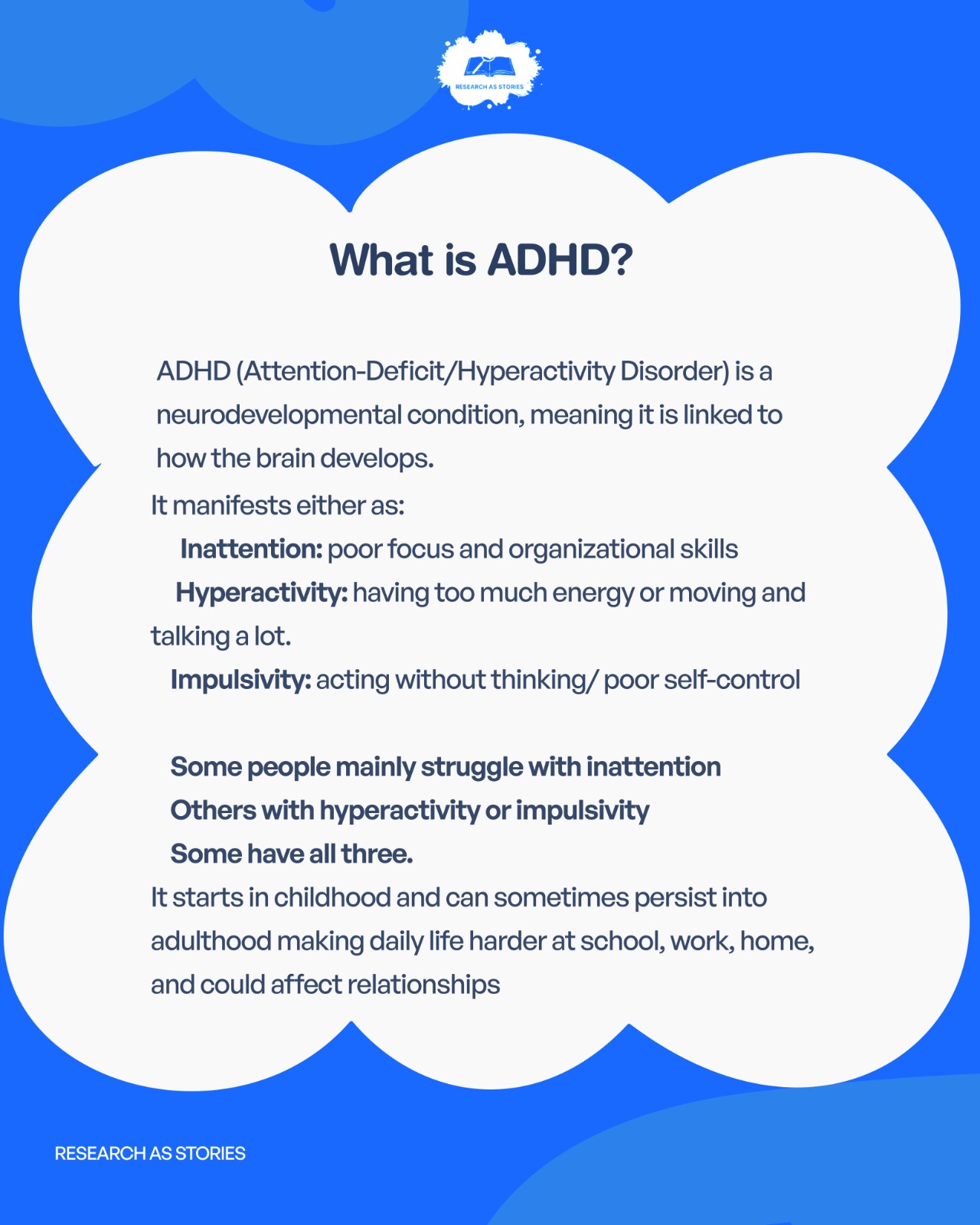
What is ADHD? Swipe through to explore the signs, causes, and myths surrounding how it presents across different ages and genders.
Do you want to be part of the team behind Research as Stories? 📚✨ We are expanding our team and looking for passionate, committed volunteers to help us translate complex research into engaging, accessible narratives! We are currently recruiting for the following roles: Graphic Designer: Create impactful visual assets, infographics, and branding materials that bring stories to life. Social Media Manager: Drive our digital presence, engage with our community, and grow our audience across platforms. Writer: Craft compelling science narratives, articles, and summaries from research data. Lived Experience Contributor: Share your personal story and insights to bridge academic concepts with real-world human experience. Have Content Ready to Share? 📖 If you already have a ready-to-publish paper, article, story, short video, or podcast, you can submit your work directly to be featured on our platform! Why Join Us? Gain hands-on experience in science communication, digital media, and publishing. Build your portfolio with high-visibility projects. Collaborate with a diverse network of researchers, creators, and advocates. Help make vital research accessible and meaningful to a global audience. 👉 Apply for a role or submit your content here: https://docs.google.com/forms/d/e/1FAIpQLSdwe9bNHkA5GEBkvqznnvCopdEG0fwh9dXV3ibwh0Lhp3b9_Q/viewform
We’re looking for contributors for Research As Stories. if you’re an early-career researcher or science writer who wants their work to actually reach people, this is for you. Research As Stories takes real papers and turns them into stories anyone can read. the ones about how your brain fills in what your eyes miss. about minds doing things that shouldn’t be possible. science that deserves more than a citation count. the format is simple: pick a real paper you care about and tell its story. any genre. narrative, essay, fiction, poetry, whatever form fits the science best. the only rule is that the paper is real and the science stays honest. no publishing experience needed. send us a dm if you’re interested.
Every year, thousands of research papers are published and promptly ignored. Not because the science is boring but because the science is buried, locked inside abstracts and methodology sections and jargon dense enough to stop a determined reader cold. Somewhere inside those PDFs are stories about how the brain decides what you’re allowed to see, about identities that share a body but not a pair of working eyes, about the mind doing things that should not be physically possible. Most of that never reaches you. It sits in a journal and dies quietly. That’s the problem Research As Stories exists to fix.